

Blog ·Getting Started
Are clear aligners right for me?
A plain-language guide to who clear aligners work best for, the kinds of issues they correct, and when another route might be better.

It’s the first question almost everyone asks - and a good one. Clear aligners work for a wide range of people, but not for everyone. Here’s how to think about it before you speak to a dentist.
What aligners are often used for
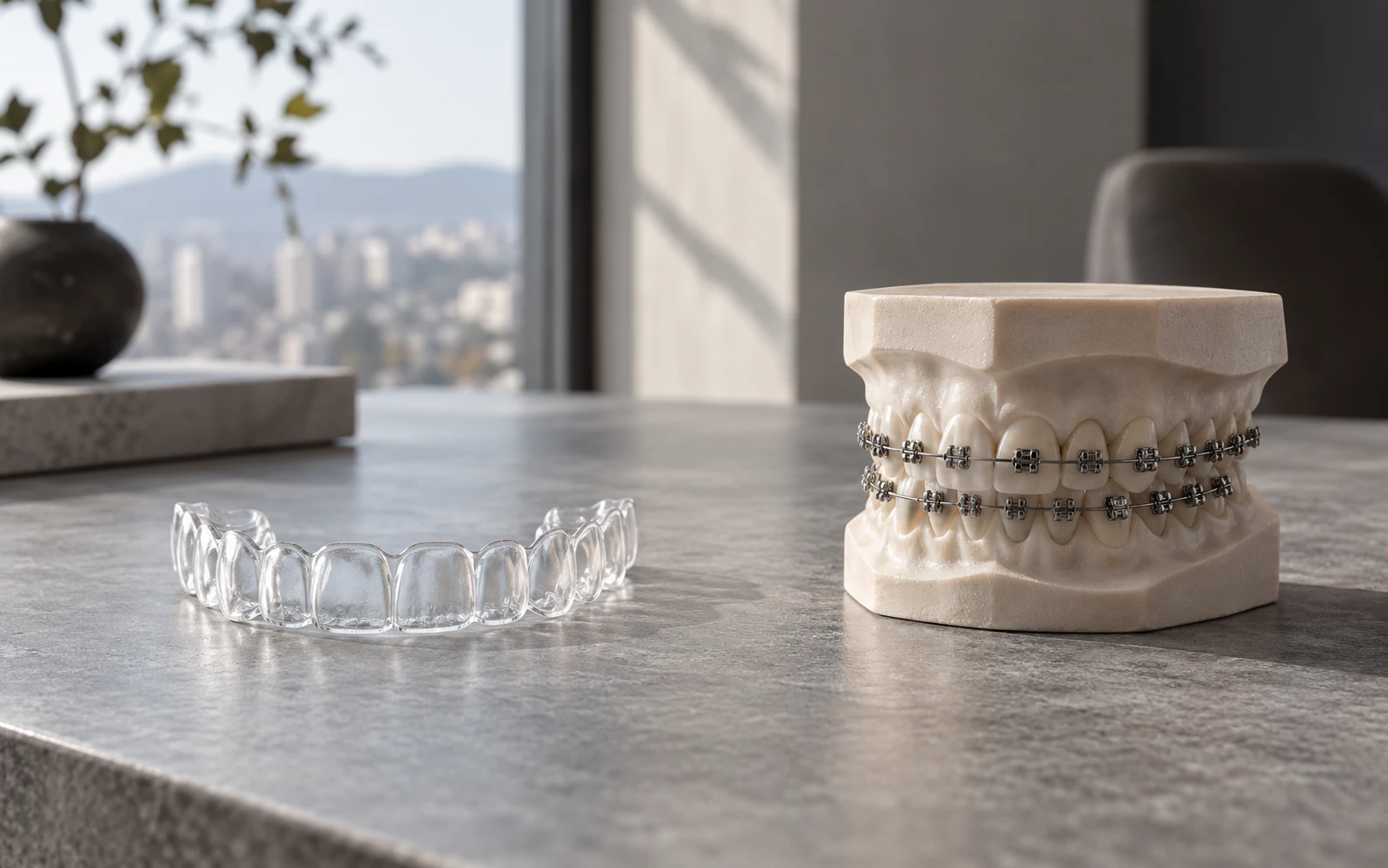
Clear aligners are commonly used to treat crowded teeth, gaps between teeth, and many bite issues such as overbite, underbite and crossbite. Many people who choose aligners want to fix something that has bothered them for years - or something that has shifted since they had braces as a teenager.
When another route may be better
Some complex cases - for example, significant jaw discrepancies or teeth that need very large movements - may be better treated in a different way. That isn’t a failure. It simply means your dentist or orthodontist will recommend what’s right for your teeth.
The part that’s about you, not your teeth
Aligners work when you wear them, around 20-22 hours a day. If you’re ready to build that routine, you’re already a strong candidate. If you’re unsure, that’s worth an honest conversation at your assessment.
- Your goalsWhat would you like to change, and why now?
- Your teeth and biteA clinical assessment and digital scan show what’s possible.
- Your routineCan you wear aligners consistently through the day?
This article is general information, not medical advice. Your partner dentist will talk you through your own options.
How to find out for sure
The only way to know is a clinical assessment with a dentist. Start with your free smile assessment - it’s the easiest way to find out where you stand, with no commitment.