

Blog · Getting Started
Clear aligners vs. braces: an honest comparison
Clear aligners and braces can both straighten teeth. Here’s how they compare side by side - and why, for many adults, aligners fit real life better.
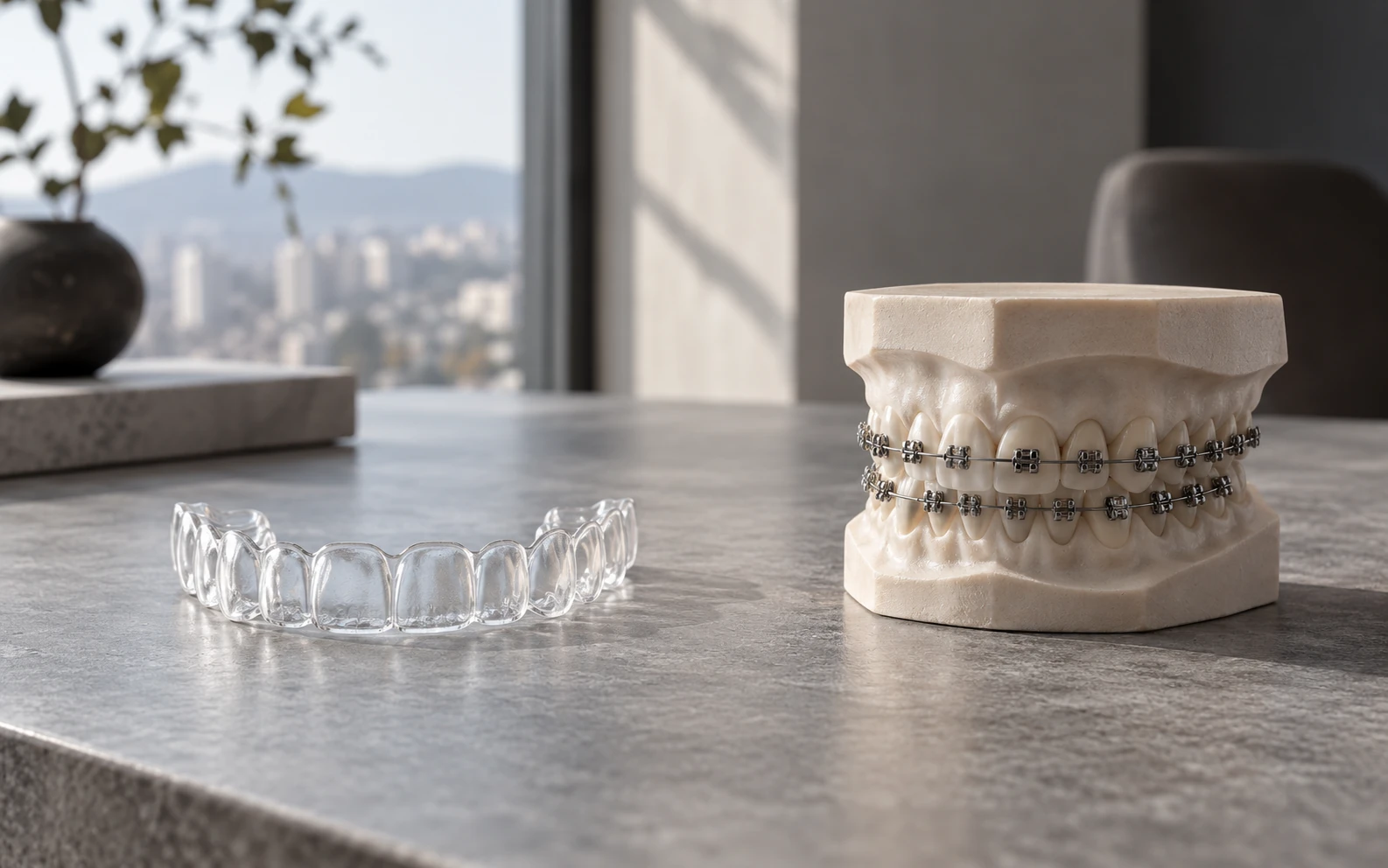
For decades, braces were the only real option. Today, many adults choose clear aligners instead - not because braces don’t work, but because aligners fit around the life you already have. Here’s an honest side-by-side look.
At a glance
| Clear aligners | Braces | |
|---|---|---|
| Appearance | Clear and hard to notice | Visible brackets and wires |
| Eating | Take them out - eat what you like | Some foods to avoid |
| Cleaning | Brush and floss as normal | Extra time around brackets |
| Comfort | Smooth, no wires | Brackets can rub at first |
| Seeing the plan | 3D plan before you begin | Adjusted visit by visit |
| Everyday check-ins | Tracked in the NextGen 22 app | Regular adjustment visits |
| Wear time | Needs 20–22 hours a day | Always on - no routine needed |
| Complex cases | Suitable for many cases | Can suit some complex movements |
Why many adults choose aligners
Aligners are designed around everyday life. They’re discreet at work and in photos, they come out for meals, and cleaning your teeth stays simple. With NextGen Alygn, an orthodontist prepares your plan, so you can see the journey in 3D before you commit.
The best treatment is the one that fits your teeth - and your life.
Where braces still make sense
Braces are fixed, so they work without relying on your routine. Some complex movements can also be easier to achieve with braces. If consistency is a concern, or your case is complex, your dentist may recommend them - and that’s a good, honest answer.
Making the choice
Your dentist will explain which option suits your case after a clinical assessment. Start with your free smile assessment to find out whether clear aligners are right for you.
This article is general information, not medical advice. Your partner dentist will talk you through your own options.